A field guide to rice lager
Japanese-style rice lager: what it actually is (and is it gluten-free?)
Rice has been slipping into beer for well over a thousand years, quietly doing the job barley takes all the credit for. It's the reason some of the cleanest, driest, most deliciously drinkable lagers on earth taste the way they do. So: what a rice lager actually is, why it ends up so crisp, and the honest answer to the internet's favourite question — is rice beer gluten-free?
What is a rice lager — and is "rice beer" the same thing?
A rice lager is a beer brewed with rice alongside — or in place of some of — the malted barley. "Rice beer" is the same thing in a t-shirt. Japan built an entire brewing tradition on it, and plenty of the world's big-name lagers quietly lean on it too, because rice has a genuinely useful superpower: it delivers fermentable sugar without the weight, the colour or the bready sweetness of malt. Less baggage, more refreshment.
One myth to bin while we're here: a rice lager is not sake. Sake is rice wine — a different, stronger, stiller creature you would not sink three of at a barbecue. A rice lager is a proper hopped, cold-conditioned beer that simply happens to be part rice.
How is rice beer made (and why is it so crisp)?
Brewers use rice as what's endearingly called an "adjunct": a clean, neutral source of fermentable starch sitting alongside the barley. The yeast turns it into alcohol and then politely leaves without making a mess — less residual sugar, less body, fewer carbs, a drier finish. Barley brings the character; rice takes away the stodge. Do it with Japanese precision and you get a lager so clean it practically squeaks.
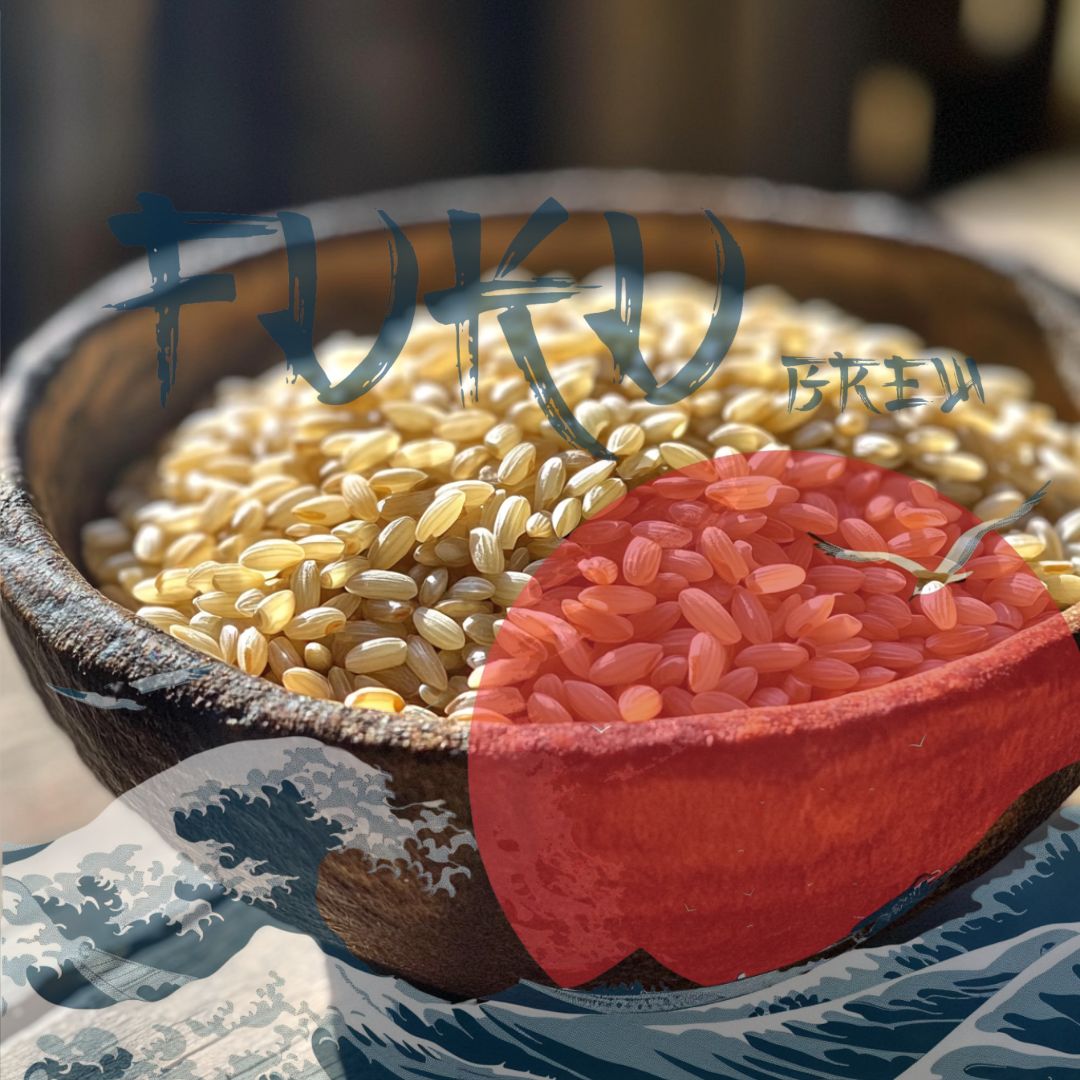
FUKU's version has one particular flourish: Italian rice. Italy is, to nearly everyone's surprise, the biggest rice grower in Europe — the Po Valley has been at it for centuries (yes, the same paddies behind a very good risotto). Marry that to Japanese brewing technique and you've got the whole "Japanese inspiration, Italian cultivation" idea in a glass.
What does rice beer taste like?
Clean, crisp, dry and light on its feet. If a wheat beer is a big fluffy jumper and a malty lager is a Sunday roast, a rice lager is a cold flannel on a hot day: refreshing, precise, and gone before you've finished the sentence. It finishes dry rather than sweet, which is exactly why it disappears so easily — and why it's just as happy next to a plate of fritto misto as it is at the ramen place.
Is rice beer gluten-free?
Short answer: usually not — and don't let anyone tell you otherwise. Rice itself is gluten-free, but most rice lagers (FUKU included) are still brewed with malted barley, and barley is where the gluten lives. What the rice does is dilute the grain doing the damage, so a rice lager is genuinely lower in gluten — and, thanks to that clean fermentation, lower in carbs — than your average all-malt or wheat beer. Lower, though, is not the same as free.
Properly gluten-free beers are their own category: brewed with no barley or wheat at all, or de-glutened, and labelled as such. So FUKU is the friendlier pint for the gluten-curious, not a safe one for coeliacs. If you need strictly zero gluten, reach for a certified gluten-free beer — no hard feelings.
Rice lager vs wheat beer vs your average lager
- Rice lager — the featherweight: driest and crispest, lowest in gluten and carbs, built purely for refreshment.
- Wheat beer — the heavyweight in a dressing gown: hazy, full-bodied, more gluten.
- All-malt lager — the dependable middleweight: maltier, breadier, more filling.
None of them is objectively "better". But only one lets you have a second without feeling like you've eaten a loaf.
Is rice beer better for you?
Depends entirely on who's asking. A rice lager is lighter, drier and lower in carbs and gluten than most beers — which is precisely why the "I'm being good this month" crowd keep reaching for one. We won't insult you by calling it a health drink; it's beer, and proudly so. But of all the ways to have a beer, this is one of the tidier ones.
And the name?
Fuku (福) is Japanese for good fortune. It's pronounced fookoo — worth getting right before you order one loudly across a crowded bar. A reasonable name for a beer that borrows Japanese technique, Italian rice, and rather more luck than either tradition would admit to.